Key Takeaways

  • Real AI applications in immersive events include generative visual content that responds to audio and live data, real-time audience sensing, and AI-assisted content creation workflows.
  • Most "AI-powered" claims in the event venue market are marketing language applied to pre-rendered loops or basic motion graphics.
  • The meaningful question is not whether a venue uses AI but whether the AI application creates a materially different guest experience.
  • Dotan Negrin and the LUME Studios team have been working with real-time generative visual systems using TouchDesigner and computer vision since 2016.
  • The biggest near-term AI opportunity in immersive events is not visual generation. It is personalized spatial audio and real-time environment adaptation.

The Conversation Happening in Every Experiential Marketing Forum

In experiential marketing and immersive event communities online, AI is the subject of more threads than almost anything else right now. The questions range from genuine curiosity to clear confusion: "Is AI changing what immersive events look like?" "Should we be asking venues about their AI capabilities?" "Is the AI angle just hype?"

The honest answer is: some of it is real, a lot of it is hype, and the distinction matters for anyone planning an immersive event in New York City in 2026.

At LUME Studios at 393 Broadway in SoHo, founder Dotan Negrin has been working with real-time generative visual systems using TouchDesigner, Max MSP, and computer vision technology since 2016, nearly a decade before "AI-powered events" became a marketing phrase. Here is what we have found from the inside of this technology.

What AI Is Actually Doing in Immersive Events Right Now

Real application 1: Generative visual content that responds to live data

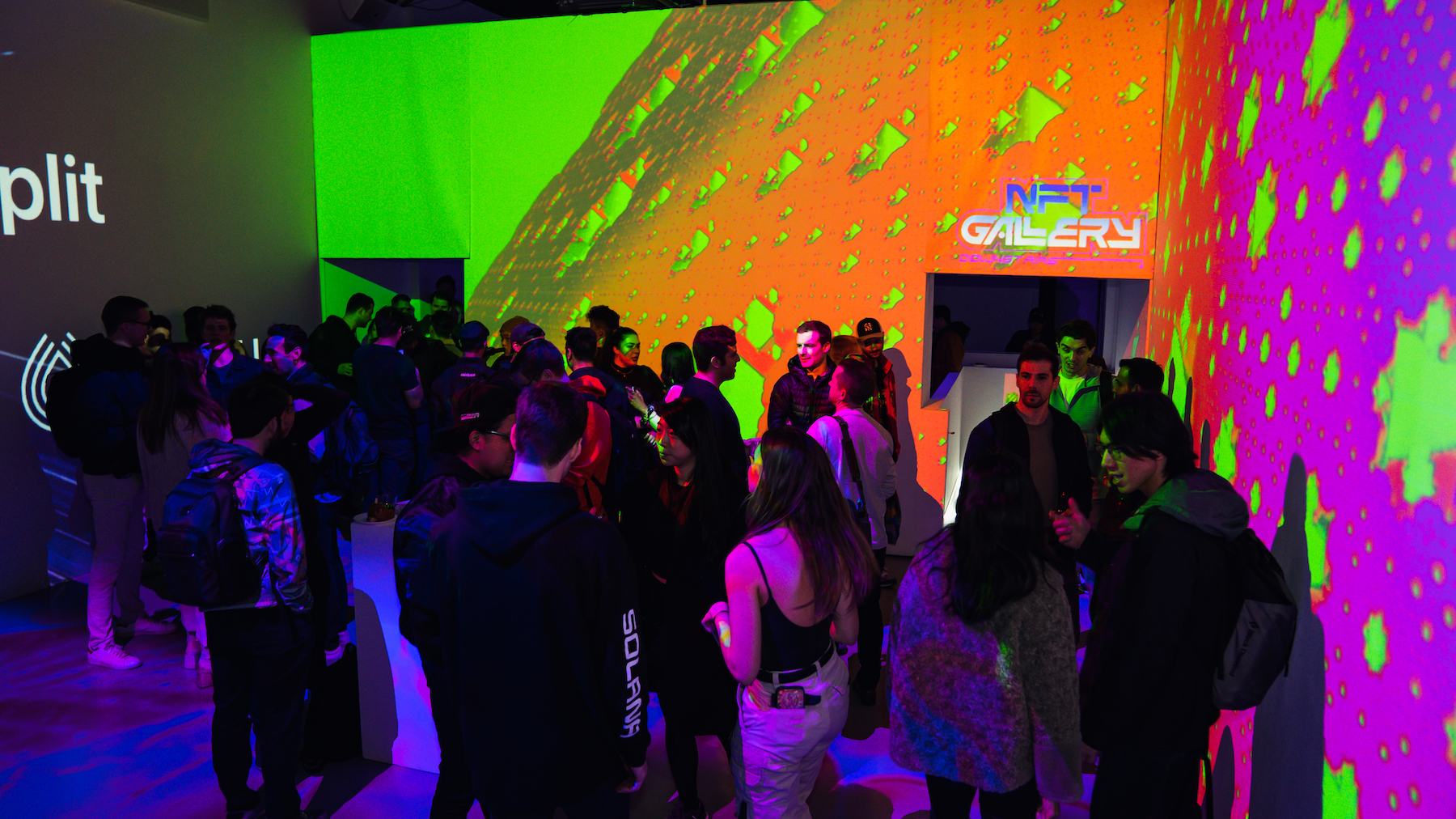
The most mature and genuinely impactful AI application in immersive environments is generative content: visual systems that produce output in real time by responding to inputs like audio, crowd density, temperature, or brand data feeds. Instead of a pre-rendered video loop playing on the walls, the environment changes based on what is actually happening in the room.

At LUME Studios, we have been using real-time generative systems in productions since our early years. The practical result for guests is an environment that feels alive rather than decorative. The visual world responds to the music, to the energy of the crowd, and to the moment. This is materially different from a projection screen.

Real application 2: AI-assisted content creation

AI image and video generation tools have meaningfully accelerated the content creation workflow for custom visual environments. What previously required weeks of motion graphics work can now be prototyped in hours, iterated in real time with a client, and refined into a final production-quality asset in days. This reduces cost and planning cycle time for custom activations without reducing quality.

The critical point here is that AI tools assist in-house creative teams. They do not replace the technical knowledge required to map content to a 16-projector system, calibrate for room geometry, and adapt in real time during a live event.

Real application 3: Computer vision and audience sensing

Computer vision systems that track audience movement, density, and interaction allow immersive environments to respond to where guests are and what they are doing. A projection environment that brightens the corner of the room where the largest group is gathering, or that shifts its visual register in response to crowd energy levels, creates a guest experience that feels genuinely interactive rather than passive.

This application has been part of the LUME Studios technical toolkit since Dotan Negrin built the first version of the sensing system in 2017. It is not new technology. It is technology that most venues do not have the in-house expertise to implement.

What Is Mostly Hype

"AI-powered" is currently being applied as a marketing modifier to almost everything in the event production space. Pre-rendered loop content being described as AI-generated. Basic motion reactive graphics being called AI environments. Static video content with generative filters being positioned as real-time AI experiences.

The test for whether an AI claim is real is simple: is the content generated in real time during the event in response to live inputs, or is it pre-rendered content that was made using AI tools and is now playing on a loop? Both can look similar in a marketing video. They are completely different guest experiences.

The Near-Term Opportunity: Spatial Audio Personalization

The most underexplored AI opportunity in immersive events is not visual. It is spatial audio.

Current spatial audio systems in high-end immersive venues like LUME Studios use 17-speaker JBL configurations with fixed mix positions. The next generation of spatial audio systems, using AI-driven real-time beamforming and room-model adaptation, will allow different guests in different positions within the same space to hear meaningfully different sonic environments. A guest standing in the center of the room and a guest standing near the perimeter will experience the same event through a different audio lens.

This technology is in early deployment in purpose-built immersive facilities. It will be a differentiating factor for advanced immersive venues within the next 2 to 3 years.

AI vs. Traditional Production: What Actually Changes

Production ElementTraditional ApproachAI-Enhanced ApproachGuest Experience Difference
Visual content creationMotion graphics, weeks of productionAI-assisted generation, days of productionFaster iteration, lower cost, same quality
Environment behaviorPre-rendered loopsReal-time generative response to audio and dataEnvironment feels alive, not decorative
Audience interactionFixed environment regardless of crowdComputer vision sensing, adaptive responseSpace responds to guest behavior
Spatial audioFixed mix positions for full roomAI beamforming, position-aware mixingDifferent guests hear different experiences
Content prototypingStoryboards and mood boardsAI-generated visual previewsClient sees the environment before event day

Frequently Asked Questions

Should I specifically ask a venue about their AI capabilities when planning an event?

Ask, but ask specifically. The question to ask is not "do you use AI?" because everyone will say yes. The questions that matter are: does your visual system generate content in real time during the event or does it play pre-rendered loops? Do you have computer vision sensing in the space? Can the environment adapt based on live audience data? Those questions separate real capability from marketing language.

Does AI-generated visual content look different from traditionally produced content?

In 2026, at the quality tier used by experienced in-house creative teams, AI-assisted and traditionally produced content are visually indistinguishable in a live event context. The difference is in the production timeline and cost, not in the visual output quality for most applications.

Will AI eventually replace the technical expertise required to run an immersive production?

Not in the near term. The challenge in immersive production is not content generation. It is calibration, integration, real-time operation, and adaptation. Those require deep hands-on knowledge of the physical space, the projection geometry, the audio system, and the interaction between all of them. AI tools assist with the content layer. The systems knowledge required to operate a 16-projector venue during a live event is human expertise that is earned through years of direct experience.

What is the most important AI-related question to ask an immersive venue in 2026?

Ask whether the environment changes during the event based on what is happening in the room, or whether it runs a fixed sequence regardless of guest behavior. That distinction separates a genuinely adaptive immersive system from a high-resolution screen. The answer tells you immediately whether the AI language is technical reality or marketing positioning.

Come See What Real-Time Generative Looks Like

LUME Studios at 393 Broadway in SoHo has been building real-time generative visual and audio systems since 2016. Come see the difference between a pre-rendered loop and an environment that responds to the room in real time.

Book a Free Walkthrough

Contact us: hello@lumestudios.com | (212) 203-3732