
The Hidden Cost of the Multi-Vendor Model: What Brands Are Actually Paying For

The Question That Keeps Coming Up
In event planning and brand marketing communities online, a version of this question appears constantly: is it cheaper to book a raw venue and hire your own vendors, or use a full-service production partner?
The surface answer seems obvious: source each vendor competitively, negotiate individual rates, and save money on each line item. After producing over 1,600 events at LUME Studios at 393 Broadway in SoHo since 2016, here is what the multi-vendor model actually costs. Before you sign anything with any venue, run through our 12-question event space vetting checklist, it covers the contract clauses and vendor policy questions that most clients miss.
The Agency Layer
Most brand activations do not go directly from brand to venue. They go brand to agency to venue to vendors. Each handoff adds margin, communication lag, and an opportunity for the original brief to lose something in translation.
When an agency sources a projection company, a lighting designer, an AV team, a content studio, a staffing agency, and a catering company, they are managing six vendor relationships on the brand's behalf, and billing for that management time. Agency production markups on vendor costs typically run 15 to 25 percent. On a $30,000 production, that is $4,500 to $7,500 in markup before a single projector is turned on.
At LUME Studios, agencies book the space directly and work with one team for the entire production. The immersive system, visual content, lighting, audio, staffing, and catering are all in-house. The agency's job becomes creative direction and client management, not vendor coordination. That is a better use of their time and a cleaner invoice for the brand.
The Coordination Tax
Even with an agency managing the vendors, someone has to own the communication chain. A six-vendor production in New York typically requires 40 to 60 hours of coordination work across contracts, load-in schedules, tech riders, and day-of logistics. That time comes from somewhere, either absorbed into agency overhead and billed back, or eaten by the brand's internal team.
Freelance event producers in New York City bill between $85 and $175 per hour for complex multi-vendor productions. At the lower end of that range, 40 hours of coordination is $3,400 that never appears on a line-item budget.
The Creative Gap
When six vendors are each optimizing for their own deliverable, the result is almost always a collection of pieces that do not cohere as a single experience. The projection company delivers a projection. The lighting designer delivers lighting. The AV team delivers audio. Nobody owns the whole picture.
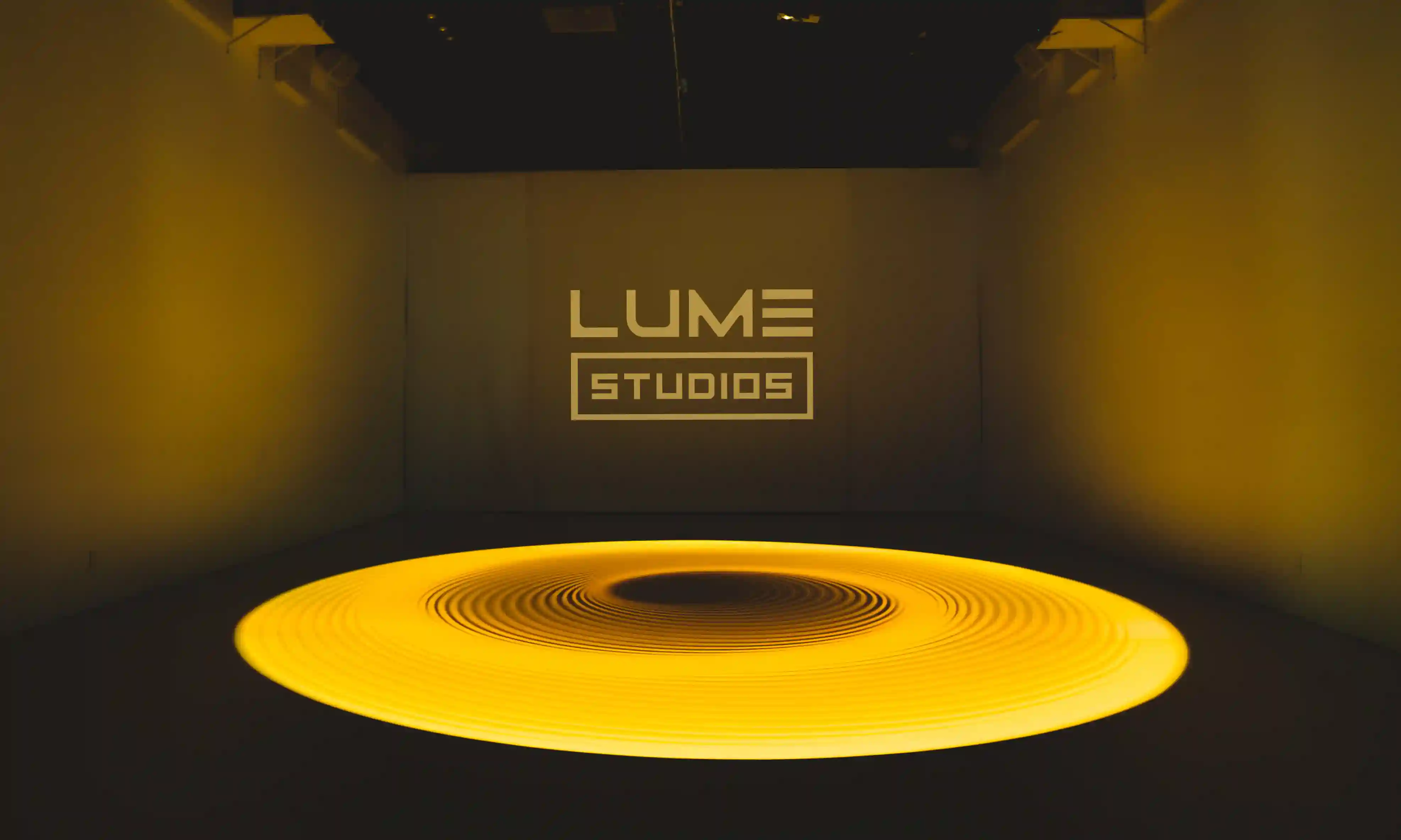
At LUME Studios, the 16-projector projection system, the 17-speaker JBL spatial audio setup, the LED lighting, and the custom visual content are all built by the same team in the same space. The agency brings the creative brief. LUME builds the environment. There is one vision from start to finish because there is one team executing it.
The Day-Of Variable
The gap between in-house and multi-vendor production is most visible when something goes wrong on event day. With an in-house technical team that built the system, problems get resolved in minutes by people who know every cable and setting. In a multi-vendor model, especially one being managed through an agency, a technical issue requires identifying which vendor owns it, reaching the right contact, and waiting for a response while guests are in the room.
This is the variable that almost never appears on a planning budget and almost always determines whether an event is remembered as great or as the one where something broke.
What This Looks Like in Practice
A brand working through an agency to produce a 150-person activation in New York City faces two realistic paths. Path one: raw venue at $8,000, agency-sourced vendors totaling $18,000 to $22,000, agency production markup of $4,500 to $7,500, internal coordination time, and day-of risk distributed across six contacts. Path two: LUME Studios at a comparable all-in rate with one brief, one team, and one point of accountability from load-in to wrap. The math is closer than it looks on paper. The risk profile is not close at all.
Key Takeaways
- Most brand activations are planned through an agency, which adds a third layer between the brand and the venue, and a third set of markups on every vendor line item.
- A raw venue at $8,000 plus separately sourced vendors typically totals $29,000 to $35,000 before agency fees, contingencies, and coordination overhead.
- Creative coherence suffers when six vendors are each optimizing for their individual deliverables rather than a unified experience.
- In-house production at a full-service venue often costs the same or less as the agency model when all real costs are counted.
- Day-of risk is the most underestimated variable in the multi-vendor model, and the hardest to fix from an agency office.
If you are planning a brand activation in New York City and want to understand what an integrated production approach actually costs, start with a conversation.
Contact us: hello@lumestudios.com | (212) 203-3732
Download the full PDF
19 pages. 46 sources. Every figure traced back to the people who measured it. Enter your email and the PDF opens right away.
We'll send the next edition when it's out. No spam.
.jpeg)