
What 1,600 Events Taught Us About What Actually Makes People Share

The Question Event Planners Keep Asking
In event planning and experiential marketing communities online, a version of this question appears in almost every thread about brand activations: we spent a significant budget on our activation and barely anyone posted about it. What did we do wrong?
The direct answer: the event was designed around the brand, not around what the guest would feel and share. After producing over 1,700 events at LUME Studios at 393 Broadway in New York City since 2016, here is what we have found. Shareability is the engine behind post event content longevity. For a deeper look at how that plays out over time, read how the best activations keep working for weeks after the event ends.
Finding 1: People Share Environments, Not Logos
The single most common mistake brands make when designing activations is centering the logo. What gets shared is a world. When guests walk into a room where every surface has been transformed into a complete visual environment, they are not consciously thinking about the brand. They are inside something remarkable and they share that feeling.
The current data points the same way: 59% of attendees capture content at live experiences and 82% tell friends and family about the brand afterward (EventTrack 2026). The environment is the product.
The Bai x Sydney Sweeney activation at LUME Studios shows this directly. The projection environment was built around Bai's brand palette and campaign imagery. What guests shared was the lush, nature-inspired world they were standing inside. The brand was felt, not read.
Finding 2: The Share Decision Is Made in the First 60 Seconds
If a guest reaches for their phone within 60 seconds of entering the space, the event will generate substantial content. If they do not, it almost certainly will not. The arrival experience is the single most important design decision in any activation.
This tracks with what the data shows about attendee behavior: 78% of event attendees now expect real-time sharing capability, and most of that sharing happens in the first hour. The arrival moment either triggers it or it does not happen.
Finding 3: Surprise Travels Further Than Beauty
Beautiful environments get photographed. Surprising environments get shared with a caption explaining what the poster just experienced. Tabletop projection mapping at the Roku executive dinner shows this clearly, when guests saw their dinner plates become a living animated canvas, they photographed it before they understood why. That is the difference between appreciation and surprise. Appreciation stays in camera rolls. Surprise gets posted.

Finding 4: Vertical Surfaces at Eye Level Outperform Everything Else
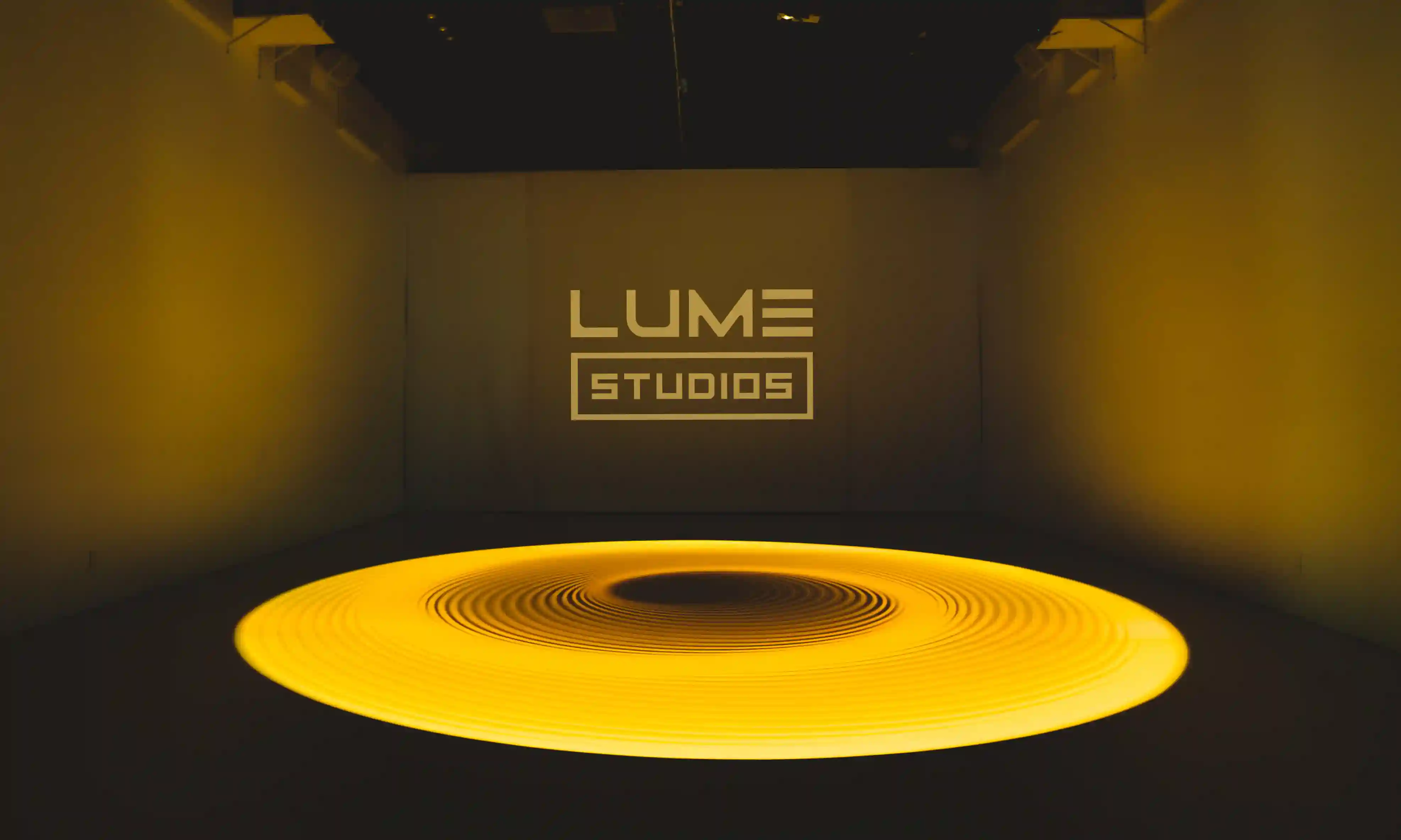
Guests photograph what is at eye level and slightly above. Floor projection looks visually impressive in person but almost never gets shared because capturing it requires an overhead angle most people cannot achieve at a standing event. Wall projection at eye level is what ends up in feeds.
Key Takeaways
- The share decision is made within the first 60 seconds of entering a space.
- People share environments and feelings, not logos or products.
- Surprise generates more shares than beauty alone.
- Wall projection at eye level consistently outperforms floor and ceiling projection for guest photography.
- Content capture must be a design principle from day one, not a post-event production task.
- Experiences that require a caption to explain rarely travel beyond the original audience.
Plan an Event Built for Sharing
Shareability is an outcome of how the entire experience is designed from the first creative brief. LUME Studios designs every production at 393 Broadway in SoHo with shareability built into the environment from day one. Start with a look at our brand activation capabilities or book a walkthrough.
Contact us: hello@lumestudios.com | (212) 203-3732
Download the full PDF
19 pages. 46 sources. Every figure traced back to the people who measured it. Enter your email and the PDF opens right away.
We'll send the next edition when it's out. No spam.
.jpeg)