
Why Your Brand Activation Needs Fewer Guests Than You Think

The Math Nobody Does
A brand plans an activation for 150 guests at a budget of $60,000. That is $400 per guest. At 75 guests with the same budget, that is $800 per guest. The $800 per guest event can include a better catering program, more custom content, a more precisely designed arrival experience, and a more intimate environment where the immersive system can actually do what it is designed to do.
The $400 per guest event is often a crowded room where guests cannot find a clear sightline to the projection content, the arrival moment is compressed by the volume of people arriving at once, and the bar line is longer than the time most guests spend engaging with the brand environment.
According to Swoogo's 2025 research, companies investing in micro events, defined as smaller, more targeted gatherings, are 15% more likely to report year-over-year growth above 20%. The data has been moving in this direction for several years. The shift toward quality of engagement over quantity of attendees is not a niche preference. It is an industry-wide trend supported by measurable business outcomes.
What Overcrowding Does to an Immersive Environment
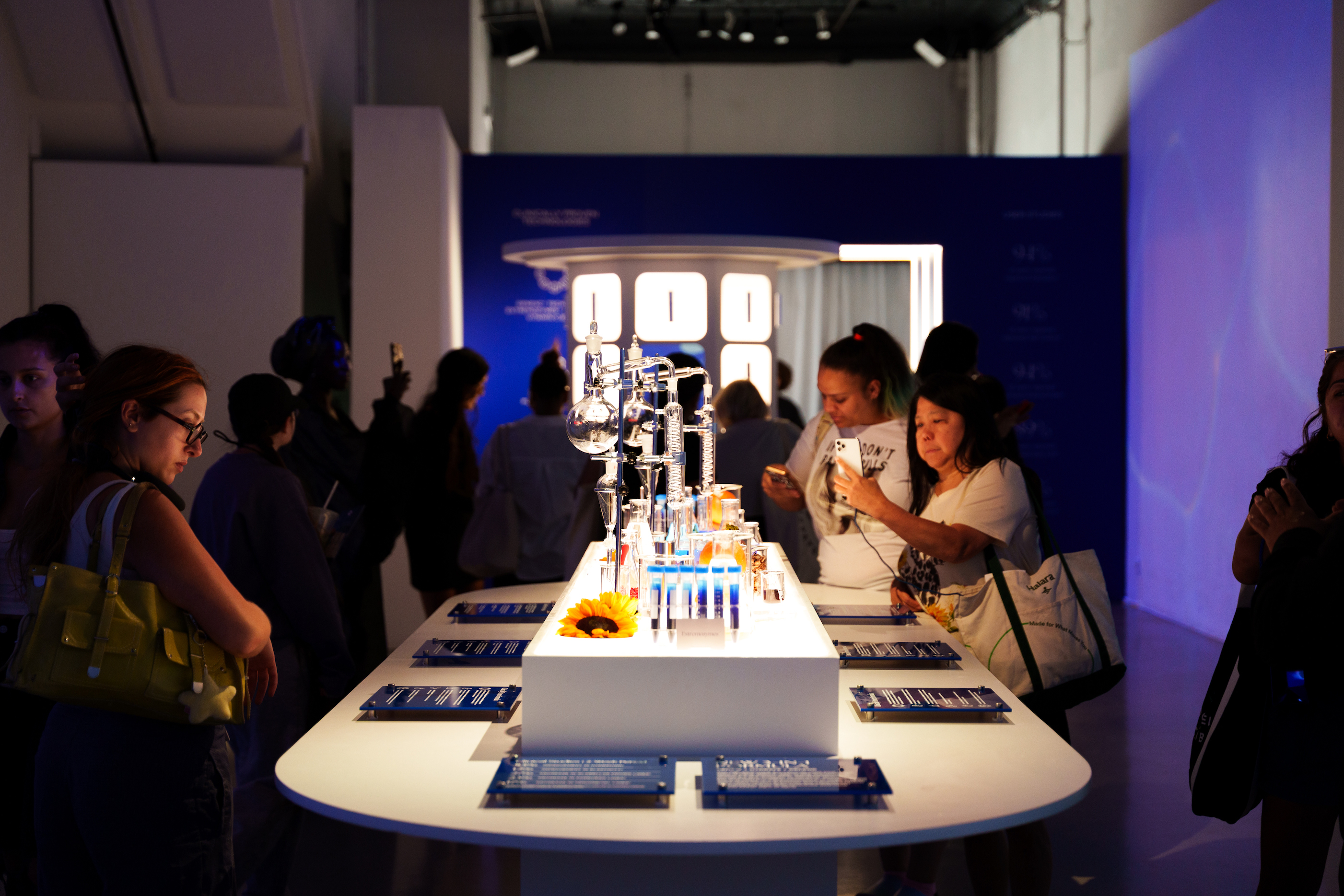
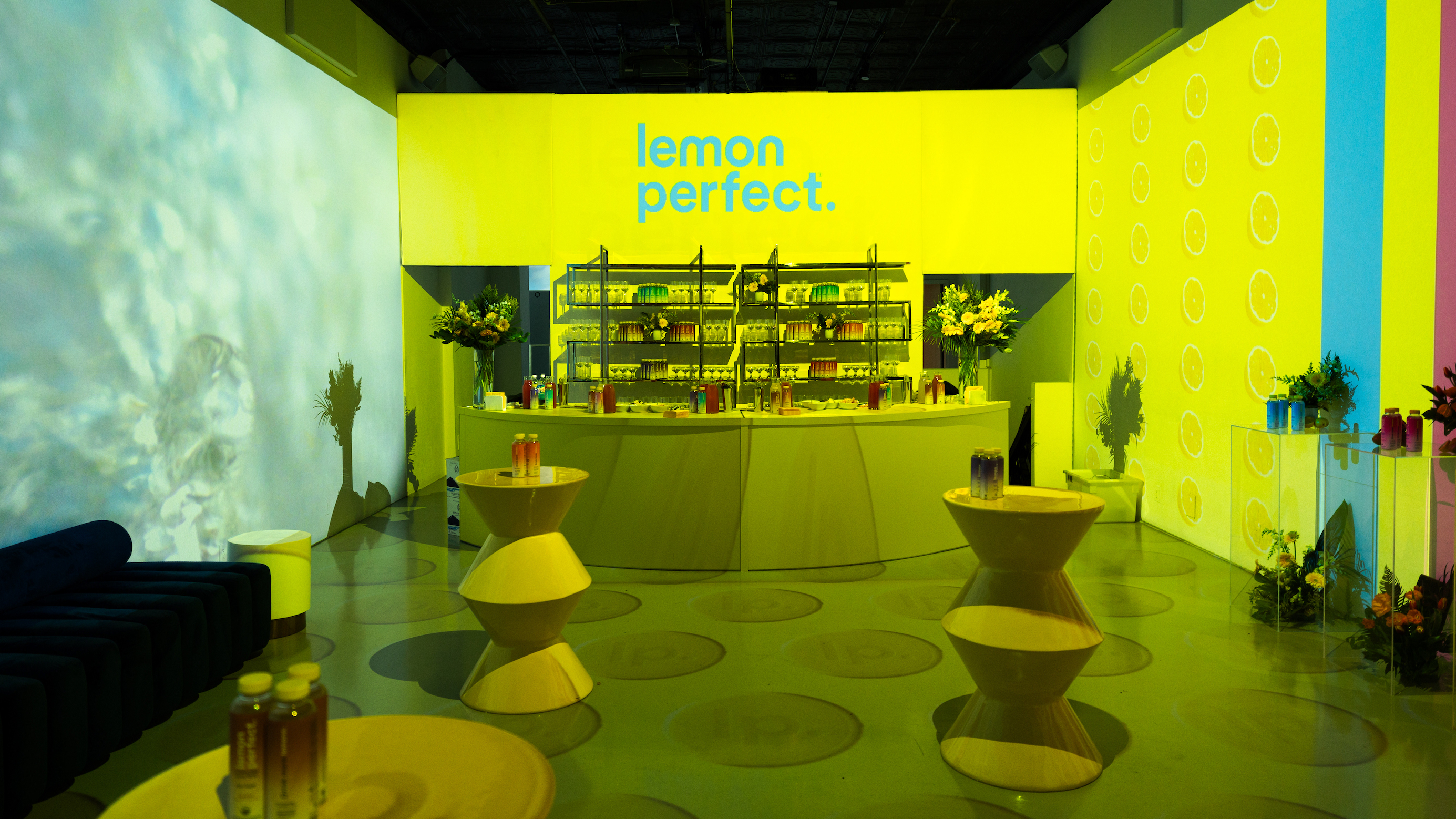
LUME Studios is 5,400 square feet across five levels. For an immersive event with custom projection covering walls, floors, and ceilings, there is an optimal density at which the environment works as designed. Above that density, guests block sightlines to projection surfaces, the spatial audio mix becomes less effective as more bodies absorb sound, the arrival experience compresses as people cluster at the entrance, and the most photogenic moments of the evening become impossible to capture because every frame has other guests in it.
We have hosted events at 200 guests in this space. They work. They are well-attended, energetic, and visually impressive. They are not the same experience as a precisely designed 75-person activation where every element of the environment functions as intended.
The Right Guest List vs. a Large Guest List
The most valuable outcome of any brand activation is not reach. It is relationship quality and content quality. A guest list of 75 journalists, buyers, influencers, and key accounts who are precisely selected for the brand's specific goals will consistently outperform a list of 150 broadly invited guests across every meaningful metric: press coverage, social content quality, follow-up meeting rate, and long-term relationship value.
The JetBlue immersive arcade activation at LUME is a good example. The guest list was highly curated around travel media and key consumer accounts. The density was intentional. Every guest had a clear reason to be in the room. The result was stronger press coverage and more coherent social content than several larger LUME events have produced.
When Larger Guest Counts Make Sense
There are real scenarios where a larger guest count is the right decision. Consumer sampling activations where breadth of trial is the primary objective. Events designed primarily for internal employee audiences where inclusivity matters. Cultural events like the Adidas x Manolo Lopez Super Bowl party where the energy of a full room is part of the brand narrative. Flagship activations with a budget and space calibrated specifically for 150 to 200 guests.
The question is whether the event has been designed for the guest count or whether the guest count has been imposed on an event designed for fewer people. The former can be excellent. The latter is consistently disappointing.
Frequently Asked Questions
What is the ideal guest count for a brand activation at LUME Studios?
For a full immersive brand activation with custom projection, catering, and a curated guest experience, 75 to 125 guests is the range where every element of the LUME environment functions optimally. Below 50 can feel sparse unless the event format is specifically designed for intimacy, such as an executive dinner. Above 150 begins to degrade the immersive experience at the edges of the space.
How do you determine the right guest list for an activation?
Start with the objective, not the list. If the objective is press coverage, build the guest list around media. If the objective is enterprise sales acceleration, build it around qualified accounts and their decision-makers. If the objective is consumer brand awareness, build it around influencers with genuine audience alignment. The guest list is a strategic document, not an invitation exercise.
Does a smaller guest count affect the social content output from an activation?
Not in the way most brands fear. A room of 75 highly engaged, precisely selected guests consistently produces more and better social content than a room of 150 broadly invited guests. According to Eventgroove's 2025 research, nearly 72% of event attendees capture content during events. The quality of that content is determined by the quality of the environment and the engagement of the individual guest, not the total number of guests in the room.
----------
The short answer: Guest count is not a proxy for event success. The best activations we have produced at LUME Studios were often 50 to 75 people. Smaller guest counts allow for more precise environmental design, deeper relationship quality, stronger content from each guest, and a more controlled brand narrative. Brands that over-invite dilute the experience, reduce the quality of conversation, and create logistical complexity that directly degrades the immersive environment they paid to build.
In brand marketing communities online, a version of this conversation comes up regularly: "We have budget approved for 150 guests. Should we invite everyone on the list or curate down to 75?"
The instinct is almost always to invite more people. More guests means more reach, more content, more proof of success to show internally. This instinct is almost always wrong for brand activations.
After producing over 1,600 events at LUME Studios since 2016, the pattern is consistent: the most successful activations by every meaningful measure were not the ones with the most guests. They were the ones with the right guests at the right density in the right environment.
Key Takeaways
- According to Swoogo's 2025 research, companies investing in micro events (smaller, targeted gatherings) are 15% more likely to have 20%+ year-over-year growth
- Guest count and event success are not positively correlated: the best activations at LUME are consistently 50 to 100 guests
- Overcrowding an immersive environment directly degrades the visual and sensory experience guests came for
- A guest list of 75 highly targeted individuals produces more social content, better press, and stronger relationships than 150 broadly invited attendees
- Smaller activations cost less to execute at the same quality level and allow for higher per-guest investment in the experience
Right-Size Your Next Activation
LUME Studios at 393 Broadway in SoHo. We will tell you the guest count that makes your specific activation work, not the one that looks impressive on an invite count report.
Or reach us at hello@lumestudios.com or (212) 203-3732
.png)

.png)